洋学史学会は、洋学・蘭学史研究の伝統と遺産とを継承し、
それを次世代に引き継ぐという大きな課題を担っています。
今後も、より多くの方々の参加をお待ちしています。
・5月総会・研究報告の参加受け付けを開始しました。(2026.3.10)
・2026年度報告者を募集しています。報告希望者はフォームよりお申し込みください。(2025.11.17)
開催日:2026年5月10日(日)11:00~11:45(オンライン参加者は10:45~入室開始)
開催方法:ハイブリッド開催(対面/オンライン)
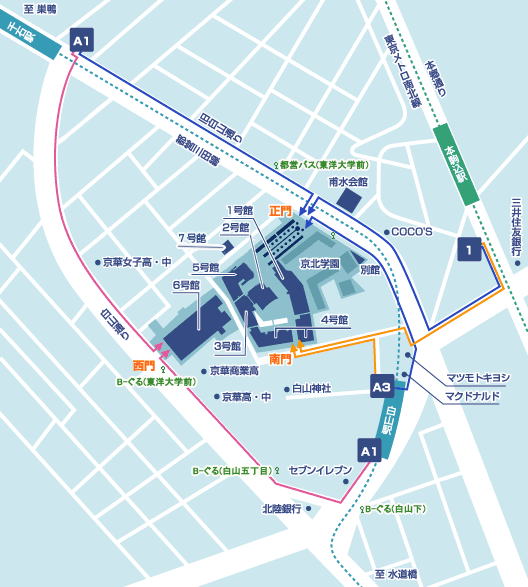
会場:東洋大学白山キャンパス(教室は調整中)
共催:東洋大学文学部史学科
開催日:2026年5月10日(日)13:00~17:30(オンライン参加者は12:45~入室開始)
開催方法:ハイブリッド開催(対面/オンライン)
会場:東洋大学白山キャンパス(教室は調整中)
近代以前の日本の医学は、漢方医学を基礎としていましたが、近世中後期以降の蘭方医学の流入・普及によって、全く異なる考え方・性質の医学が共存する時代になりました。しかし、明治新政府は明治7年の「医制」発布に代表されるように、西洋医学を正式に採用する一方、漢方医学に対しては、明治28年帝国議会で漢医継続願を否決し、西洋医学中心の時代へとシフトしてゆきました。
近代の日本の西洋医学化は、何をもたらし、また、何を失ったのでしょうか。その中で、既存の施設・医師達はどのような動きをしていたのでしょうか。
洋学史学会では、これまで医学関係として、日本の洋学・西洋医学に貢献した人物・事績に焦点を当てたシンポジウム等を開催致しておりましたが、幕末維新期の西洋化政策の中での医学動向およびその影響等を取り上げた企画はありませんでした。近年、この時期の医学状況、及び地域の具体的な医療実態に関する研究等が進み、従来定説とされてきた事象への新たな知見、新たな側面の発見など、多数提示されてきております。
本企画では、幕末維新期に西洋化してゆく中での医学・医療の光と影に焦点を当て、制度・教育・従来施設や開業医、漢方医の動向等、5名のご報告と3名のコメントを用意し、この時期の日本における西洋東洋両医学・医療について様々な角度から議論してゆきたいと考えております。多くの方々にご参加いただけますよう、お願い申し上げます。
司会:岩下哲典(東洋大学教授)
開会の言葉:平野恵(洋学史学会会長、台東区立中央図書館)
趣旨説明:長田直子(山梨大学非常勤講師)
報告① 萱田寛也(徳川林政史研究所研究員)
外国人医師による診察をめぐる動向―幕末の箱館を事例に―
報告② 海原亮(住友史料館副館長)
「医制」初期における地方医師の学問履歴 ―新川県の事例―
報告③ 塩原佳典(信州大学准教授)
明治初年の医学修業:諏訪郡瀬沢の在村医嗣子・三村恭平の選択
報告④ 木下浩(岡山大学医学部医学資料室室長補佐)
近代初期の医療を支えた従来開業医とその再教育
報告⑤ 松村紀明(帝京平成大学准教授/杏雨書屋研究員)
従来開業医からみた明治初期の感染症対策
青木歳幸(佐賀大学特命教授)
西巻明彦(日本歯科大学新潟生命歯学部医の博物館客員教授)
町泉寿郎(二松学舎大学教授)
閉会の言葉・事務連絡:長田直子
事前申込制:5月3日(日)申し込み締め切り
時間:18:00~20:00
会場:留園
会費:5,500円
日時:2026年4月4日(土)15:10〜 ※終了後に懇親会を予定
会場:ドットブリッジ神保町 - dot bridge神保町
開催方法:対面・オンライン併用開催(オンライン参加用Zoom URLは後日、報告資料と同時配布を予定)
事前登録制、登録はこちらから。 ※4月2日締切
報告者:河瀬真弥(京都先端科学大学人文学部講師)
報告タイトル:国語辞書をめぐる歴史叙述――『言海』『日本大辞書』を中心に――
>>若手部会4月例会の詳細はこちら
洋学史関連の展示・シンポジウムなどの情報です。
たくさんの情報をお待ちしています。
概要:
本イベントでは、幕末から明治初年にかけて活躍した旧萩藩士・正木退蔵に焦点を当て、その人物像と業績を多角的に検討します。正木のロンドン滞在経験や、東京職工学校における教育活動を手がかりに、日本と西洋技術の接続のあり方を考察するとともに、近年の研究成果および調査を踏まえた新たな視点を提示します。あわせて、ロンドン大学(UCL)と萩市を結ぶ新たな取り組みについても紹介します。
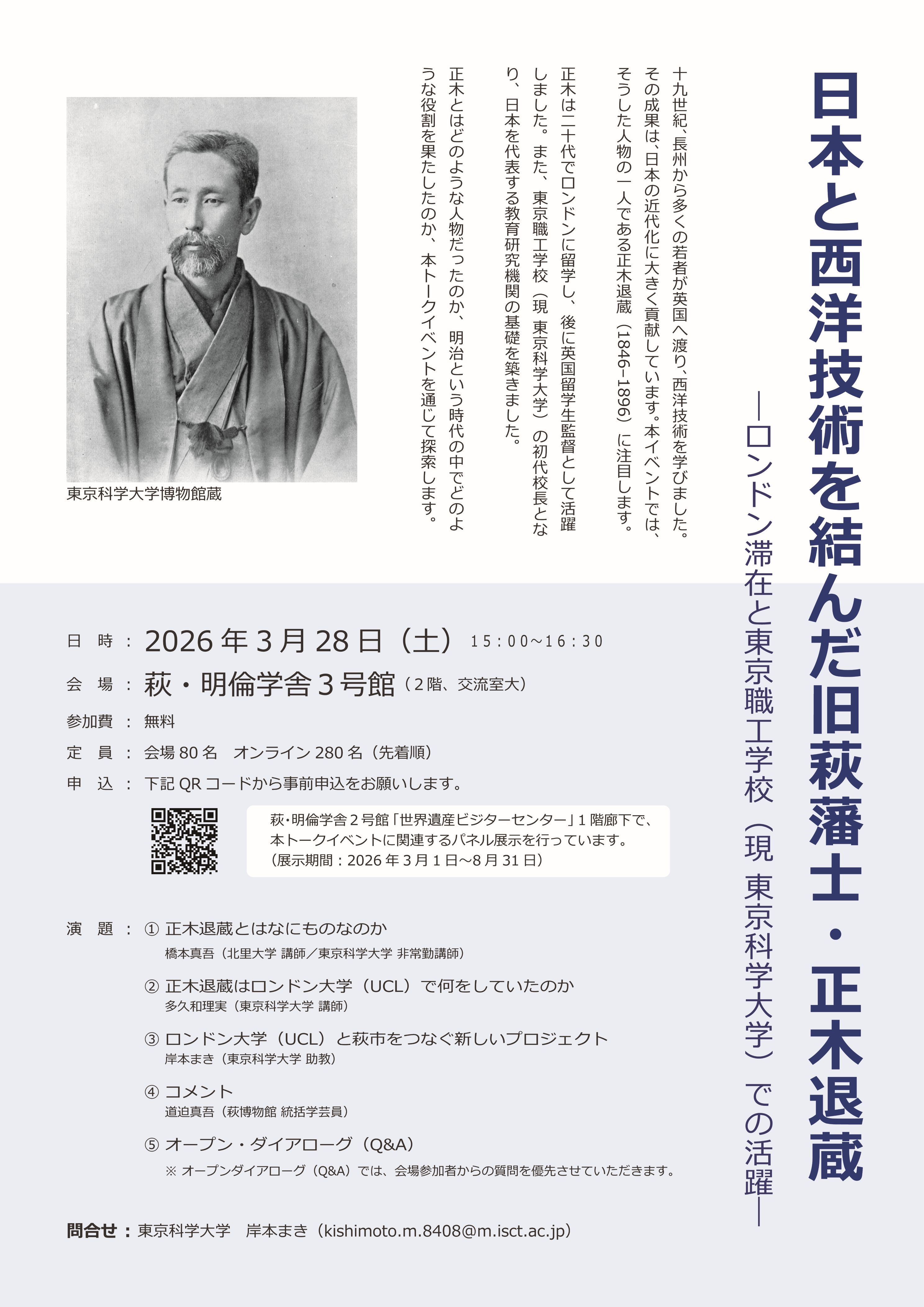
日時:2026年3月28日(土)15:00-16:30
会場:萩・明倫学舎(山口県萩市)
開催方法:対面・オンライン併用開催(Zoomによるオンライン配信あり)
事前登録:こちらのフォームより事前にお申し込みください
>>詳細情報
*回顧展「別府貫一郎が描いたイタリア」関連シンポジウム
日時:2026年4月3日(金)13:00~18:00
会場:イタリア文化会館 ホール(東京都)
洋学史関連の雑誌・書籍などの情報です。
たくさんの情報をお待ちしています。


 平岡隆二
平岡隆二